Cortisone Injections: The ESP Guide to Diagnostic vs. Therapeutic Value

Cortisone Injections: The ESP Guide to Diagnostic vs. Therapeutic Value
At a Glance
Corticosteroid injections (CSIs) are potent anti-inflammatory tools used to manage pain and localized inflammation in the shoulder and elbow. Beyond simple pain relief, they serve as a critical “triage tool” to confirm a clinical diagnosis and determine if a patient’s symptoms are truly originating from the suspected structure.
Clinical Insight (The Sixth Sense)
In the Ontario triage model, we often see a “negative” MRI or a “minor” ultrasound finding that doesn’t seem to explain the patient’s level of disability. This is where the ESP Sixth Sense comes into play. We look for the “Diagnostic Gap.”
If an injection into the subacromial space provides 100% relief for two hours (the duration of the local anesthetic) but the pain returns exactly as it was, we have achieved a positive diagnostic block. This tells us with certainty that the subacromial space is the generator of the pain, regardless of what the imaging says. Conversely, if a patient with a “massive tear” on MRI gets zero relief from a perfectly placed injection, our intuition tells us to look elsewhere—perhaps the cervical spine or a neuropathic driver is the true culprit.
Anatomy & Mechanics
Cortisone (a synthetic version of cortisol) works by suppressing the immune response and reducing the production of inflammatory mediators like prostaglandins.
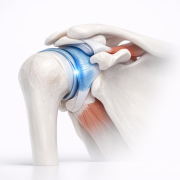
- Shoulder: Common targets include the subacromial bursa, the glenohumeral joint (for frozen shoulder or OA), and the AC joint.
- Elbow: Common targets include the common extensor origin (lateral epicondylitis) or the olecranon bursa.
CSIs are often mixed with a local anesthetic (like Lidocaine or Bupivacaine) to provide immediate, albeit temporary, diagnostic feedback.
The Triage Roadmap
Red Flags (See a physician immediately)
- Signs of Infection: Fever, chills, or systemic malaise following an injection.
- Skin Changes: Rapidly increasing redness, warmth, or “weeping” at the injection site (risk of septic arthritis).
- Post-Injection Flare: While some pain increases for 24-48 hours is normal, excruciating, non-remitting pain requires urgent review.
Surgical Indicators
An injection is rarely a “cure” for a surgical problem, but it acts as a Surgical Prognosticator:
- Positive Response: If a CSI provides significant but short-lived relief for a rotator cuff patient, it suggests that surgical decompression or repair is likely to be successful because the pain source has been confirmed.
- Failure of CSI: If multiple, well-placed injections fail to provide even temporary relief, the ESP and Surgeon may reconsider surgery, as the mechanical “generator” may not be the one identified on the MRI.
Conservative Path
In the interdisciplinary model, the CSI is the “Window of Opportunity.”
- Rehab Catalyst: The goal is not “pain-free rest,” but “pain-free movement.” We use the 4–6 week window of reduced inflammation to aggressively load the tendons and retrain scapular mechanics.
- Limit Frequency: In Ontario’s RAC pathways, we generally limit injections to 2-3 per year in the same site to avoid tissue degradation (especially in the weight-bearing glenohumeral joint).
Imaging Expectations
- Ultrasound-Guided (USG): In the ESP model, USG is the gold standard. It ensures the needle is precisely in the bursa or joint, not the tendon itself.
- Post-Injection Imaging: We do not typically re-image after a CSI. Clinical response (pain scores and range of motion) is a far more accurate measure of success than a follow-up ultrasound.
Interdisciplinary Outcome
The ESP-Surgeon partnership treats the injection as a data point. When a patient is referred from an ESP to an Orthopedic Surgeon at ESPClinics, the surgeon isn’t just looking at the MRI; they are looking at the “Injection Diary.”
Knowing how a patient responded to a diagnostic block allows the surgeon to move straight to a surgical discussion or, conversely, to steer the patient back toward specialized physiotherapy if the injection proved the pain was non-mechanical. This synergy reduces wait times and ensures that only those who truly need surgery end up in the OR.