Asymptomatic Findings: Why Your Scan Might Show a Tear You Can’t Feel

Asymptomatic Findings: Why Your Scan Might Show a Tear You Can’t Feel
At a Glance
It is a common clinical paradox: an MRI report describes a “full-thickness rotator cuff tear” or “labral fraying,” yet the patient has full range of motion and zero pain. At ESPClinics, we view imaging as a piece of the puzzle, not the whole picture, recognizing that many “abnormal” findings are actually normal age-related changes.
Clinical Insight (The Sixth Sense)
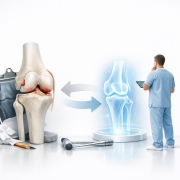
In the world of advanced triage, we often say, “Treat the patient, not the picture.” The “Sixth Sense” of an Extended Scope Practitioner (ESP) involves recognizing that the human body is remarkably resilient and adaptive.
For many patients over the age of 50, a rotator cuff tear on an MRI is often the equivalent of “wrinkles on the inside.” Just as skin changes with age without causing pain, tendons and cartilage undergo structural shifts. The true clinical skill lies in determining if the pathology on the screen matches the mechanical limitations in the room. If you have a tear but perfect function, your body has successfully compensated—and “fixing” that tear surgically might actually disrupt a stable system.
Anatomy & Mechanics
The shoulder is a high-mobility, shallow “ball and socket” joint. It relies heavily on the rotator cuff muscles (Supraspinatus, Infraspinatus, Teres Minor, and Subscapularis) for dynamic stability.
When a scan shows a tear or degeneration in an asymptomatic shoulder:
- Force Coupling: The remaining intact muscles have often strengthened to balance the joint forces, maintaining the “centration” of the humeral head in the glenoid.
- Neural Adaptation: The brain has “rewired” the motor patterns to avoid stressing the injured area.
- Structural Redundancy: Many tendons have a high safety factor; a partial loss of fibers doesn’t always lead to a loss of total power.
The Triage Roadmap
Red Flags
While asymptomatic findings are common, certain imaging results paired with new symptoms require immediate attention:
- Sudden Weakness: If a previously painless “old tear” suddenly results in the inability to lift the arm (Drop Arm Sign).
- Night Pain: Unrelenting pain that prevents sleep, even if the scan was done months ago.
- Trauma: A fall onto the shoulder in a patient with a known “stable” tear.
Surgical Indicators
Surgery is rarely indicated for a finding you cannot feel. However, an orthopedic consultation via the Rapid Access Clinic (RAC) pathway may be considered if:
- The scan shows a massive tear in a younger, active patient (under 55) where the risk of future muscle atrophy is high.
- There is evidence of “fatty infiltration”—where the muscle starts to turn into fat because the tear is so large it’s no longer being used.
Conservative Path
For the asymptomatic tear, the goal is Preservation and Prevention:
- Scapular Dyskinesis Training: Ensuring the shoulder blade moves optimally to provide a stable base.
- Rotator Cuff Conditioning: Strengthening the “force couples” to ensure the shoulder remains asymptomatic as you age.
- Education: Understanding that your shoulder is “strong but scarred,” allowing you to return to sport or work without fear-avoidance behavior.
Imaging Expectations: Reading Between the Lines
| Finding | The “Standard” Interpretation | The ESP Perspective |
| Labral Fraying | “Tear in the cartilage socket.” | Common in almost all overhead athletes and adults over 40. Usually insignificant without mechanical catching/locking. |
| Supraspinatus Tendinosis | “Disease or wear of the tendon.” | This is often just a sign of a busy, active life. It is an adaptation, not necessarily a precursor to failure. |
| Subacromial Bursitis | “Inflammation in the shoulder.” | The bursa is a cushion. Increased fluid is often a secondary symptom of minor biomechanical changes, not a primary “injury.” |
| AC Joint Osteoarthritis | “Degeneration of the collarbone joint.” | Extremely common finding. Unless there is point-tenderness directly over the joint, it’s rarely the source of shoulder pain. |
Interdisciplinary Outcome
In the Ontario healthcare model, the ESP-Surgeon partnership serves as a filter. By identifying asymptomatic or incidental findings early, we prevent unnecessary surgical consults and reduce wait times for those who truly need operative intervention.
If your MRI shows a tear but you feel fine, our role is to provide the “Sixth Sense” validation: your shoulder is functioning well, and your focus should be on maintaining that high level of compensation through evidence-based movement, rather than “fixing” an image.