Labral Tears & SLAP Lesions: Navigating Deep-Seated Shoulder Pain

Labral Tears & SLAP Lesions: Navigating Deep-Seated Shoulder Pain
At a Glance
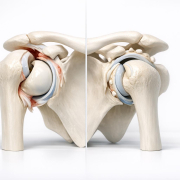
A Labral Tear involves damage to the fibrocartilage rim (the labrum) that deepens the shoulder socket, while a SLAP lesion (Superior Labrum Anterior to Posterior) specifically involves the top portion where the long head of the biceps tendon attaches. These injuries often present as deep, vague shoulder pain often accompanied by mechanical “clicking” or “popping” during overhead activities.
Clinical Insight (The Sixth Sense)
In the ESP triage setting, we often see a disconnect between imaging and function. A “SLAP tear” on an MRI report for a patient over the age of 40 is frequently an age-related change rather than the primary driver of pain.
The “Sixth Sense” in this case is distinguishing between Pathological Instability and Incidental Findings. While a 20-year-old overhead athlete with a SLAP tear likely has a mechanical stability issue, a 50-year-old with the same report often has underlying rotator cuff tendinosis. We look beyond the “tear” to see if the biceps anchor is truly unstable or if the labrum is simply showing the natural wear-and-tear of a life well-lived.
Anatomy & Mechanics
The Glenoid Labrum is a ring of specialized tissue that acts like a gasket for the glenohumeral (shoulder) joint. It increases the depth of the socket by approximately 50%, providing a critical attachment point for the shoulder ligaments.
- The SLAP Region: Located at the 12 o’clock position of the socket.
- The Biceps Connection: Because the long head of the biceps attaches directly to the superior labrum, forceful biceps contractions (like throwing or heavy lifting) can “peel” the labrum away from the bone.
The Triage Roadmap
Red Flags
Seek immediate medical consultation if you experience:
- Sudden, profound weakness in the arm.
- Total loss of sensation or “dead arm” syndrome following a trauma.
- Obvious deformity or a shoulder that remains “out of joint” (Dislocation).
Surgical Indicators
Surgery is typically considered in the Ontario RAC (Rapid Access Clinic) pathway when:
- Mechanical Block: The shoulder is physically locking or catching, preventing normal range of motion.
- True Instability: Recurrent subluxations (the shoulder feels like it is slipping out) despite 3-6 months of high-quality rehab.
- Failed Conservative Care: In younger, high-demand athletes where non-operative management fails to return them to sport.
Conservative Path
Evidence-based rehabilitation is the gold standard for the majority of labral issues in Ontario.
- Kinetic Chain Integration: Strengthening the hips and core to reduce the load on the shoulder during overhead movement.
- Scapular Dyskinesis Correction: Training the “shoulder blade” muscles to provide a stable base for the joint.
- Rotator Cuff Buffering: Strengthening the cuff to “hug” the humeral head into the socket, compensating for the labral damage.
Imaging Expectations
- X-ray: Usually normal, but essential to rule out “Bony Bankart” lesions or significant arthritis.
- Ultrasound: Generally poor at visualizing the labrum. A “normal” ultrasound does not rule out a SLAP tear.
- MRI (Standard): Can miss small tears.
- MRI Arthrogram (Gold Standard): Involves a contrast injection into the joint to “seep” into the tear, making it visible. This is the preferred tool for surgical planning in Ontario.
Interdisciplinary Outcome
At ESPClinics, the ESP-Surgeon partnership ensures that patients aren’t “over-medicalized.” If the ESP determines the SLAP tear is incidental (non-pain generator), the patient is directed toward specialized physiotherapy. If the ESP identifies true mechanical instability, the patient is fast-tracked to our orthopedic surgical partners. This synergy ensures that only those who truly need surgery end up in the operating room, while others receive the “Sixth Sense” insight needed to heal through movement.