Shoulder Dislocations: First-Time vs. Recurrent Instability

Shoulder Dislocations: First-Time vs. Recurrent Instability
At a Glance
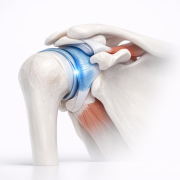
Shoulder instability occurs when the head of the humerus is forced out of the glenoid socket, either partially (subluxation) or completely (dislocation). While a first-time event is a traumatic milestone, the transition to recurrent instability represents a complex failure of both static and dynamic stabilizers, often requiring specialized surgical triage.
Clinical Insight (The Sixth Sense)
In the ESP clinic, we look beyond the “reduction report” from the ER. The Sixth Sense here involves recognizing the “Invisible Instability.” A patient may present with vague “shoulder pain” or “heaviness” without a frank dislocation. By reading between the lines of the MRI—looking for a subtle GLAD lesion (Gelenoid Labrum Articular Disruption) or a slightly shallow glenoid—we identify those at high risk for recurrence before their second or third event occurs. We often see that a patient’s apprehension (the “fear” of the arm being in a certain position) is a more accurate predictor of surgical necessity than the size of the initial tear on imaging.
Anatomy & Mechanics
The glenohumeral joint is often compared to a “golf ball on a tee,” prioritized for mobility over stability.
- Static Stabilizers: The labrum (a fibrocartilage rim that deepens the socket) and the glenohumeral ligaments.
- Dynamic Stabilizers: The rotator cuff muscles and scapular stabilizers.
- The Lesions: * Bankart Lesion: An injury to the anterior-inferior labrum.
- Hill-Sachs Lesion: A compression fracture on the back of the humeral head caused by impact against the glenoid during dislocation.
The Triage Roadmap
Red Flags (Immediate Medical Attention)
- Neurological Deficit: Numbness over the “regimental patch” area (axillary nerve) or weakness in the hand/wrist.
- Vascular Compromise: Coolness, pallor, or loss of pulse in the affected limb.
- Irreducible Dislocation: If the shoulder remains “out” and cannot be relocated via standard maneuvers.
Surgical Indicators
Surgery is often prioritized in the following scenarios:
- Young Athletes: Patients under 25 involved in contact sports have a recurrence rate often exceeding 80-90%.
- Significant Bone Loss: If more than 20-25% of the glenoid rim is “eroded” (the “inverted pear” sign), soft tissue repair alone will likely fail, requiring a Latarjet procedure.
- Engaging Hill-Sachs: A large defect on the humerus that “catches” on the glenoid during functional movement.
Conservative Path
For lower-demand individuals or those with their first event and no significant bone loss:
- Immobilization: Brief (1-2 weeks) in a sling for comfort, not prolonged stiffness.
- Proprioceptive Retraining: Teaching the brain to “re-map” the shoulder’s position in space.
- Closed Chain Loading: Exercises that keep the humerus compressed into the socket to build reflexive stability.
- Rotator Cuff Fortification: Specifically focusing on the subscapularis for anterior support.
Imaging Expectations
- X-ray (Trauma Series): Essential to rule out associated fractures (e.g., greater tuberosity) and confirm the “bony Bankart.”
- Ultrasound: Generally poor for instability; often misses the labral pathology entirely.
- MR Arthrogram (MRA): The “Gold Standard” in Ontario triage. By injecting dye into the joint, we can clearly see if the labrum has detached from the bone or if there is a “ALPSA” lesion (Anterior Labral Periosteal Sleeve Avulsion).
Interdisciplinary Outcome
At ESPClinics.com, the partnership between the ESP and the Orthopedic Surgeon streamlines the patient journey. Instead of waiting months for a surgical consult only to be told they need “more physio,” the ESP performs the initial “Shoulder Triage.”
If we identify a high-risk profile (young, contact athlete, bony Bankart), we fast-track the patient directly to the surgeon for stabilization (Bankart Repair or Latarjet). If the profile is low-risk, the ESP initiates the evidence-based rehab protocol within the FHT or RAC framework, monitoring closely for “micro-instability” that might signal a need to pivot back toward a surgical discussion. This model ensures the right shoulder gets under the right knife at the right time.